.jpeg?height=200&name=IMG_1895%20(1).jpeg)

We hope your summer was full of good things—family reunions, beach days, mountain views, or just a...
 |
 |
|
|
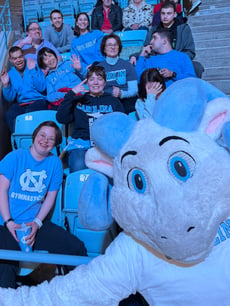
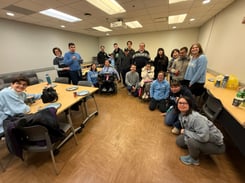
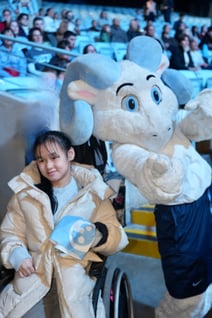
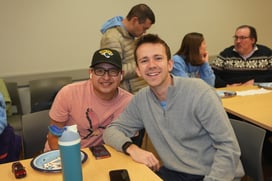
Last night’s G-Day at the University of North Carolina was more than an outing — it was a reminder of why we started this work. Members of the G-House community, UNC students, parents, DSPs, and new friends gathered at the Student Union before walking to Carmichael Arena to watch UNC Women’s Gymnastics compete against NC State. Food, laughter, and the steady rhythm of people showing up for one another: not a program, a community in motion.
On the surface, moments like this are simple: sharing snacks, crossing campus together, cheering from the stands. Underneath is something deeper — the belief that supporting others often means creating space for people to support themselves. That belief sits at the heart of what we are building.
Why We Started: Solving for G
We didn’t set out to create a movement. We were trying to solve for G — our son, who lives with the challenge of disability. Like so many parents, we were searching for a way to help our child find a place in a world not designed for those who do things differently.
Years of advocacy and problem-solving taught us something important: the tools we built for our own child could help other families too. The G Community exists so families no longer must do this work alone — so knowledge, experience, and courage can be shared instead of rebuilt in isolation.
Choosing to Build
Recently, I was accepted into a PhD program in Occupational Science at UNC. I value research deeply, but the program would not accommodate a part-time path. The same world that often fails to design for people with disabilities can also fail to design for their parents.
So, I chose to lean into the work already unfolding here. The classroom now looks different: homes, sidewalks, transit rides, DSP teams, and gatherings like G-Day where community becomes the curriculum.
A Living Experiment
The G House began as an attempt to build something that would endure — a living experiment in interdependence, shared responsibility, and belonging. Progress has come in small steps: navigating systems, hiring DSPs, building relationships, learning by doing. It hasn’t been perfect, but it has revealed that families have more agency than they sometimes realize, especially when they act together.
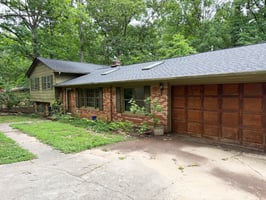
Next month, we will close on the next G House. Families will not only live there; they will buy shares and help govern it. This milestone reflects a shift from isolated caregiving to shared stewardship.
We started by solving for G. Now we work alongside many families solving for their own versions of G — each with unique challenges and hopes.
The world may not always be designed for those who move differently. But together, we can design new pathways — not just for our children, but with them — and build communities that keep moving forward.